
This content was translated using AI.
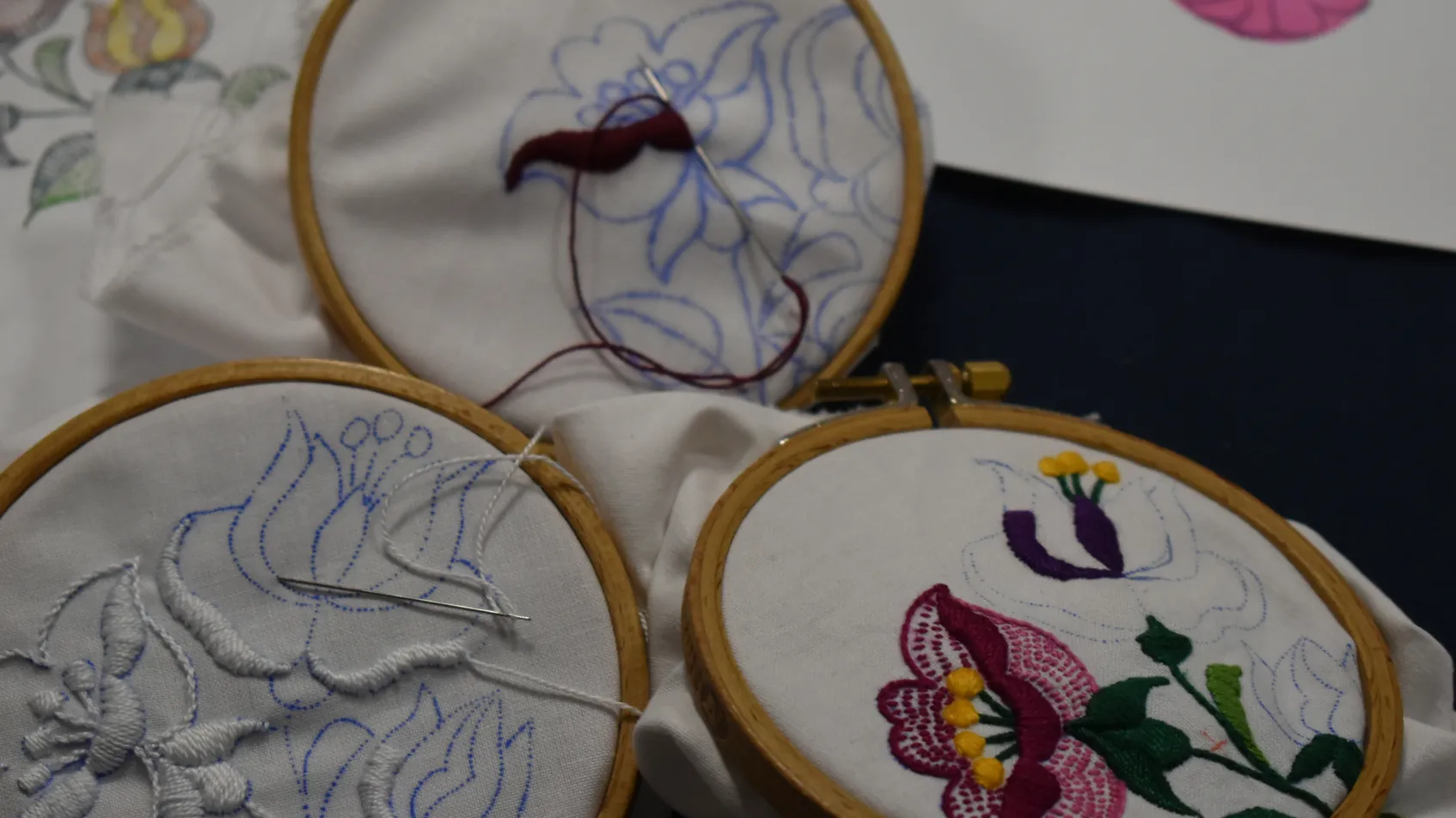
During the program, participants can explore the colorful and rich world of Hungarian folk embroidery traditions, with special attention to the distinctive ethnographic values, motif repertoires, and embroidery cultures of the Komádi and Palóc regions.
Through the sessions, participants gain insight into the traditional peasant culture in which embroidery was not merely decoration, but also a means of expressing community, identity, age, occasion, and celebration.
They learn how the distinctive pattern collections of different regions developed, and which plant, geometric, and other motifs became characteristic. Participants acquire theoretical and practical knowledge of the traditional embroidery of the two regions.
They become acquainted with the characteristic motifs, their meanings and origins, the rules of pattern placement and composition, and traditional compositional principles. Special attention is given to color use, materials, and embroidery techniques. Participants can experience how a single color, stitch type, or motif placement changes the character of the finished work, and how traditional rules can be applied in ways that are inspiring for contemporary creative thinking.
By the end of the sessions, participants come closer to the world of two exciting regions of Hungarian folk art, while taking home usable practical knowledge, new creative inspiration, and hands-on embroidery experience they have gained themselves.
Theoretical and practical leader of the workshop: Jenei Anikó, folk artist
Duration of the session: 30 hours
Registration deadline: 2026. szeptember 30. at www.bmne.hu.
We warmly welcome everyone!
Anyone can add events to the Folk Calendar. We try to check the data daily, but we cannot take responsibility for its accuracy.