This content was translated using AI.
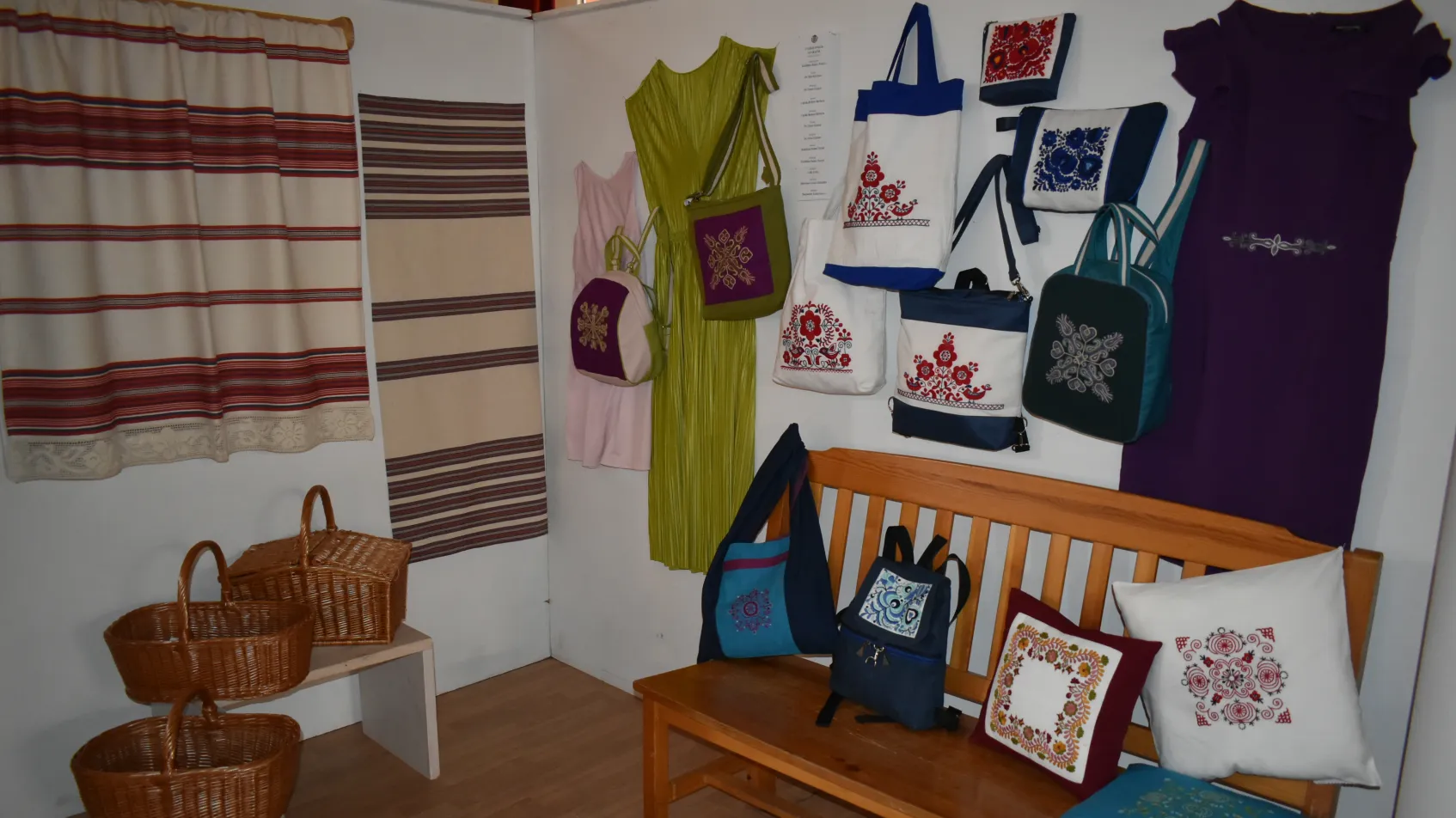
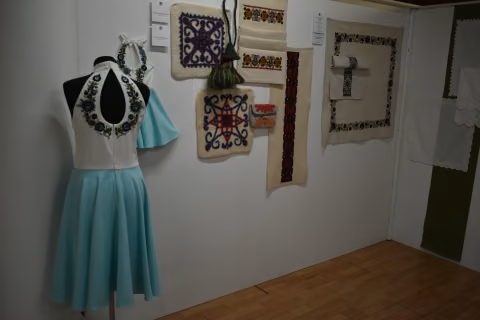
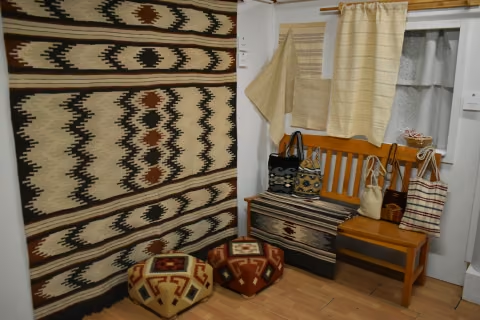
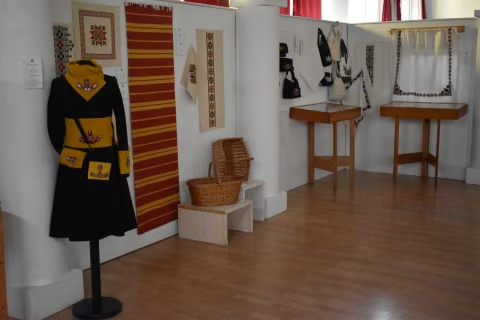
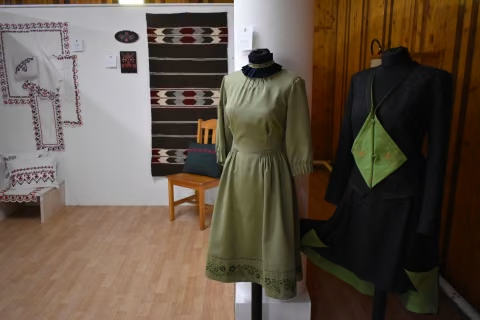
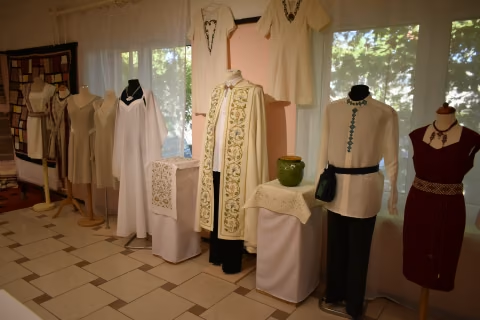
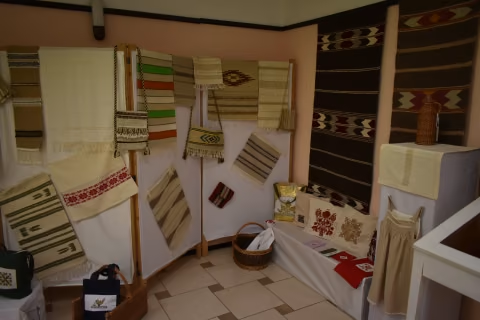
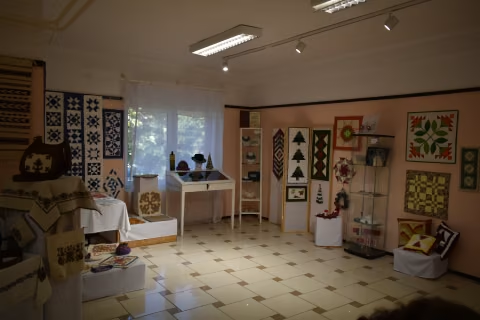
At the opening of the "Living Folk Art of Békés County" exhibition, we were able to celebrate together all that we have inherited from our ancestors, what our masters have preserved and passed on through decades and generations, and what we continue to create today with our hands, hearts, and commitment.
Because when we look at a folk art object, we actually see much more than a beautifully crafted piece. We see in it the trace of human hands, the learned movements, the knowledge acquired through much practice, the patience and the time. Within it lies the formal repertoire of a particular region, its motifs, its use of color and material, but also the personality of its creator and all that they add to the heritage themselves.
This is why living folk art is so important.
Because tradition is not a closed past that we merely wish to preserve. Tradition lives when we use it, when we learn it, when we ask questions about it, when we pass it on, and when it is born again and again in someone's hands.
It lives in the movement that a master shows to their apprentice. It lives in that moment when someone first takes the material in their hands and learns how clay, thread, wood, leather, or wool will obey them. It lives in the quiet of workshops, at the tables of craft circles, in the stories told during shared creative work, and in the encounters between generations.
It lives in the relationship between masters and apprentices.
In the moment when an aging master not only teaches a technique, but also imparts a perspective. They show how to attend to the material, how to respect the work of those who came before, and how to create something new while maintaining our connection to our roots.
And it lives in those who are still learning this knowledge today. In children, young people, and adults who begin to create out of curiosity, joy, or following an old family memory. Every stitch learned, every thread spun, every piece of clay shaped is a small step toward ensuring that our heritage is not only part of the past, but also of the future.
Perhaps this is what gives the word "living" its true meaning.
We do not simply preserve the values entrusted to us – we keep them alive. We use them, we teach them, we develop them further, and in doing so we write new stories with them.
Folk art thus becomes a bridge connecting past and present, master and apprentice, old and young, individual creator and community.
And perhaps this is its greatest value: that while we preserve old knowledge in our hands, we also give something of it to the future.
Because as long as there is someone to learn it, someone to teach it, someone to pass it on, and someone to create it with joy, folk art is not a memory.
But a living heritage.
The exhibition can be viewed during the opening hours of the Kalocsa Róza Cultural Center.
Anyone can add events to the Folk Calendar. We try to check the data daily, but we cannot take responsibility for its accuracy.